
Worried About Your UCL Injury?
An ulnar collateral ligament (UCL) injury is signified by damage to this key ligament on the inner elbow. The UCL stabilizes the elbow joint, especially when performing overhead arm movements. A partial or complete tear of the UCL can be significant, often needing surgery. Most cases occur from overuse or acute injuries to athletes in throwing sports like baseball or football. Significant tears mean chronic pain, elbow instability, and loss of throwing power and function. Tommy John surgery is the gold standard for repairing a severely damaged, torn, or frayed UCL. The issue, however, is that Tommy John surgery comes with a lengthy recovery. The extensive recovery can be a worry for patients eager to return to sport or other activities as soon as possible.
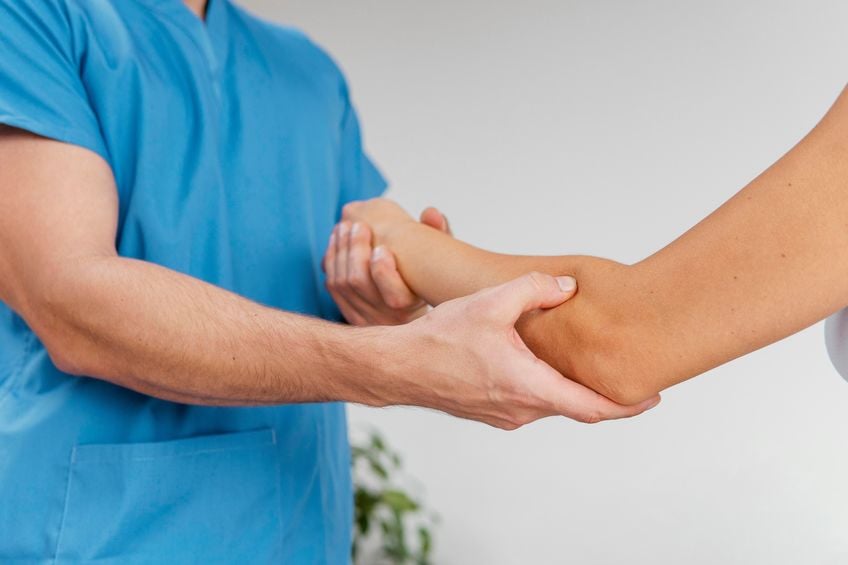
Diagnosing your UCL
A UCL tear will have clear symptoms. Some individuals will notice a pop after a throwing motion or similar arm movement, followed by significant pain. Swelling and discomfort in the elbow can occur. Instability, weakness, a loss of throwing velocity, and numbness in the fingers are other symptoms. This injury must be confirmed by a specialist, such as an orthopedic surgeon. Physical tests along with a magnetic resonance imaging (MRI) scan can confirm the extent of the injury. Most UCL tears, especially grade 2 and 3 injuries, require surgery.
Understanding Tommy John surgery
UCL reconstruction, commonly called Tommy John surgery after the famous pitcher, replaces the damaged ligament with a similar tendon graft. Tommy John surgery has evolved to an outpatient process, meaning most patients leave the hospital or surgical center the same day to recover at home. Surgery starts with incisions along the elbow where a scope is inserted to view the damaged ligament. The damaged ligament is removed to make way for the new tendon, which comes from an autograft or allograft. The surgeon drills holes in the humerus and ulna bones to anchor the new graft with surgical thread, screws, and other components. A figure 8 pattern ensures the ligament is secure. After surgery, the incisions are closed and bandaged so the patient can begin recovery
The average recovery time
This new ligament restores the stability and elbow function, allowing athletes to return to sport without a significant loss in productivity. At the same time, a significant recovery time is necessary to restore function. Tommy John surgery is renowned for having one of the longest recovery times. Statistics show that UCL reconstruction can take at least 12 months for a complete recovery. The new graft, while necessary, has no initial blood supply. Several months are necessary for the tissue to integrate with the bone, develop blood vessels, and become functional. Additional time is necessary for the holes drilled into the bone to heal and fuse with the ligament. While healing, the patient will begin a complex rehabilitation plan. The ligament must progressively learn to handle the demands of the arm, which can take multiple months of physical therapy (PT) that increases in intensity. Top performing athletes need even more time to return to peak condition and stability, pushing the timeline to 18 months or more.
It takes time
Due to the complexity of the procedure and the sensitive nature of the ligament, Tommy John surgery takes 12-18 months of recovery on average. Careful, deliberate care, and PT are also necessary to restore function and reduce the risk of re-injuring the ligament. There are some ways patients can improve this timeline. Always opting for minimally invasive surgery (MIS) instead of traditional open surgery reduces surrounding tissue damage and blood loss. There is also a lower risk of infection and complications. Sticking to an aggressive inflammation management plan that includes medication and temperature therapy can help. Strict adherence to PT, including a structured plan to resume throwing, reduces setbacks. Factors such as age, genetics, and surgical skill also matter and will influence the timeline. A UCL injury is serious, but with the right approach to recovery, patients can restore elbow function and resume sports.
Recent Blogs
Knee Replacement: Can Regenerative Medicine Help You Avoid Major Surgery?
RIO Orthopedic2026-09-15T17:28:42-05:00September 17th, 2026|
Collarbone Surgery: 3 Signs You Need Surgical Repair For A Clavicle Fracture
RIO Orthopedic2026-09-10T12:12:40-05:00September 10th, 2026|
Achilles Tendon Repair Recovery: The Critical Role Of Physical Therapy
RIO Orthopedic2026-09-10T12:12:58-05:00September 3rd, 2026|