
Do All Broken Collarbones Need Surgery?
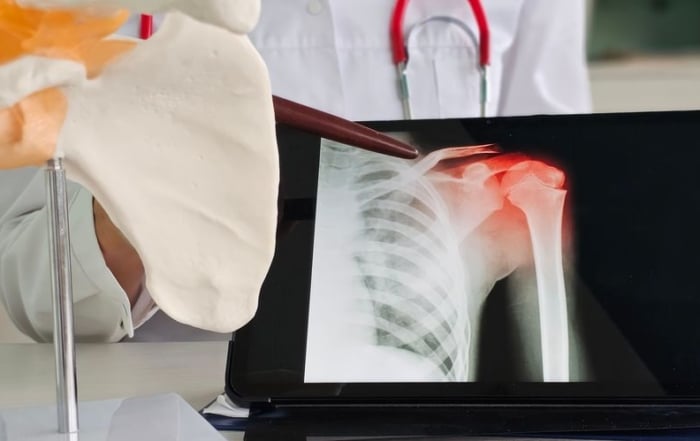
A clavicle fracture is a common shoulder injury that makes up many cases of broken bones in an emergency room. Clavicle fractures are also among the top types of fractures in adolescents. This injury is a break of the collarbone, a primary bone in the shoulder, often caused by a collision or fall on an outstretched arm. Common symptoms include difficulty raising the arm after the fall, sagging of the shoulder, bruising, swelling, and a bump over the break. Surprisingly, statistics show that only 15% of fractures require surgery. Enough evidence confirms that the injury responds well to non-surgical treatment. Knowing when surgery is necessary could be critical to long-term function.

Clavicle fracture treatment
Most clavicle fracture cases are quickly placed in a sling or figure-of-eight bandage to immobilize the shoulder. The doctor will ensure the bone is properly aligned using x-ray or other imaging techniques. From there, the bone tends to heal naturally, leaving a bump at the fracture. While the shoulder is immobilized, the patient will require pain medication to manage pain as the fracture heals. Physical therapy (PT) exercises are recommended over time to restore the range of motion (ROM) and improve shoulder strength. Typical recovery time is 6-8 weeks in adults and about 4 weeks in adolescents. While these are effective strategies, there are 3 signs that surgical repair is the best course of action.
1. It’s a compound fracture
No 2 collarbone injuries are the same. Some are severe compound fractures. When someone has a compound or open fracture, the bone is broken in multiple locations. In almost all compound fracture cases, a piece of the bone is visible through the skin. Without surgery, severe loss of function, blood loss, infection, and bone deformity are common consequences. Compound fractures are considered emergencies and are stabilized and treated promptly.
2. Beware severe misalignment
Collarbone fractures often mean the bone shifts out of place at the point of the break. A severe displacement, however, may not heal naturally. A 100% displaced clavicle fracture suggests misalignment that would not benefit from non-surgical treatment. This injury may require surgical rods, screws, and other fixatives. Collarbone fractures can sometimes cause a decrease in the length of the bone. A shortening of at least 2 centimeters (cm) has a significant risk of nonunion, misalignment, or limited function. Surgery is necessary to prevent these complications.
3. A nearby injury
Non-surgical treatment is often enough for a standalone clavicle injury. If there are associated injuries, surgery is recommended. For instance, neurovascular compromise, which is injury to nearby nerves and blood vessels, can lead to complications if left untreated. A rare injury called a floating shoulder, where the clavicle and scapula break, or any combination of fractures, warrants surgery. During initial assessments, surgeons will look for signs of these injuries and take immediate action.
What to expect during collarbone surgery
Patients who need collarbone surgery will receive an open reduction and internal fixation (ORIF) procedure. This procedure surgically realigns the collarbone. The patient is placed under general anesthesia with the arm in a position that allows easy access. An incision is made at the fracture location or where the bone penetrated the skin, closely protecting tissue and nerves. The surgeon cleans and removes bone fragments and tissue, then realigns the bone. A fixation device consisting of metal screws and plates is inserted to hold the collarbone in place. Once complete, the surgeon closes the incision, covers the location with bandages, and places the arm in a sling. Recovery, which includes PT, can take 3-6 months.
Get the right treatment
Most collarbone injuries need time and pain management. The bone will heal naturally, and most patients return to normal functioning. Surgery becomes critical in the case of a severe collarbone injury. Compound fractures, severe displacement, and associated injuries are signs that surgical intervention is necessary. Cases where the shoulder fails to respond to conservative treatment and loses optimal function also warrant surgery. Most collarbone injuries are immediately assessed by a doctor. Working with medical professionals ensures the best possible treatment plan is created that aligns with the injury. After surgery and recovery, patients can enjoy the benefits of a healed, healthy shoulder.
Recent Blogs

Knee Replacement: Can Regenerative Medicine Help You Avoid Major Surgery?
RIO Orthopedic2026-09-15T17:28:42-05:00September 17th, 2026|
Collarbone Surgery: 3 Signs You Need Surgical Repair For A Clavicle Fracture
RIO Orthopedic2026-09-10T12:12:40-05:00September 10th, 2026|

Achilles Tendon Repair Recovery: The Critical Role Of Physical Therapy
RIO Orthopedic2026-09-10T12:12:58-05:00September 3rd, 2026|