
Can Surgery Stabilize Your Ligament?
A torn ligament can dramatically affect joint stability, mobility, and confidence during everyday activities. Whether the injury occurs while playing sports, exercising, or during an unexpected fall, damaged ligaments often make a return to normal movement difficult without pain or instability. Some ligament injuries heal successfully with rest, bracing, and physical therapy (PT), but others require surgical reconstruction to restore joint function. Ligament stability is essential to overall function, so understanding when reconstruction may be necessary begins with asking the right questions. Being prepared for an orthopedic consultation can help patients make informed decisions and better understand their treatment options.
The power of ligaments
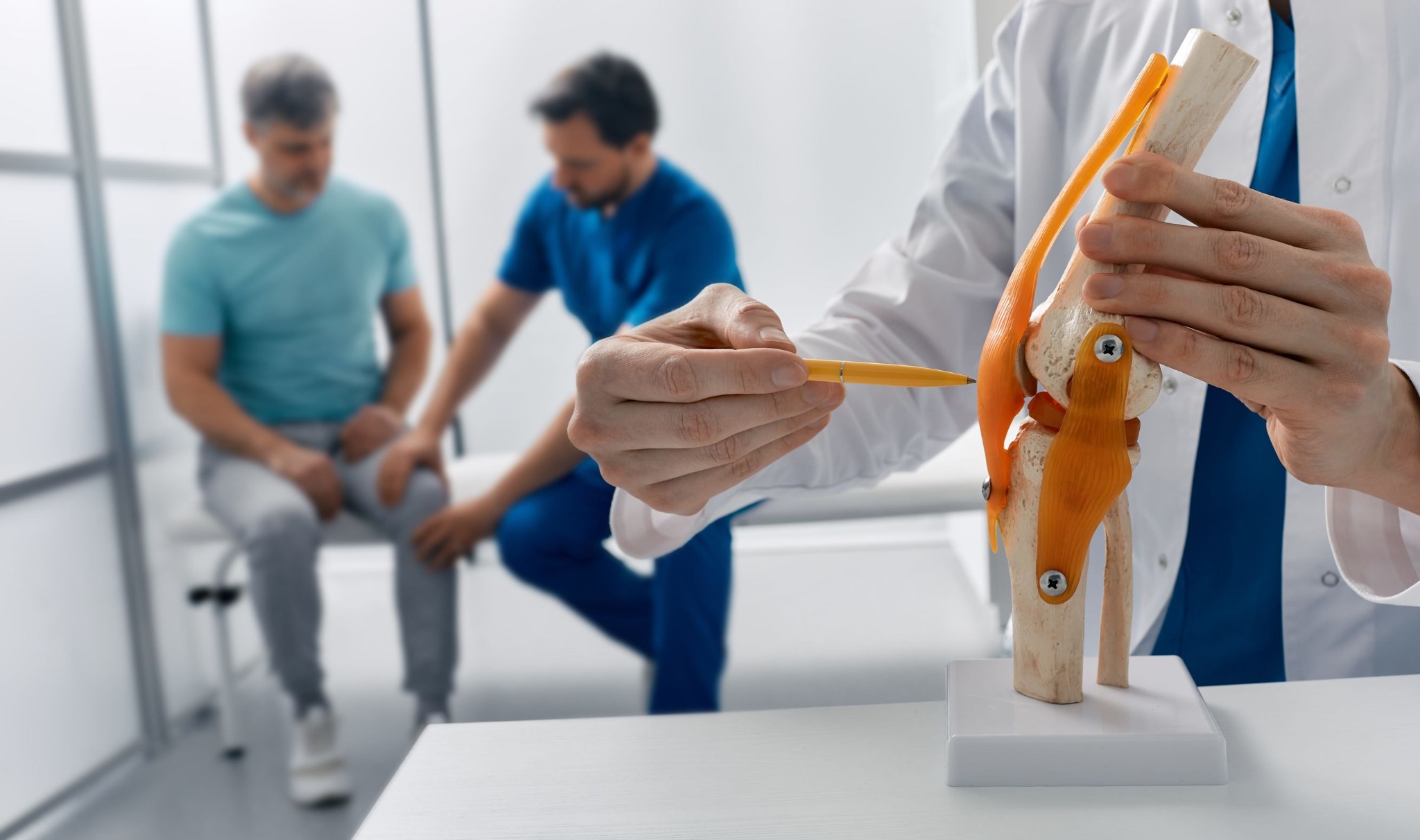
Ligaments are strong bands of connective tissue that connect bones and help stabilize joints during movement. Without ligaments, joints cannot move through a natural range of motion (ROM) safely, balance is nearly impossible, and dislocations are highly likely. Injuries are quite common, with statistics showing close to 17 million ligament-related injuries occurring each year. Depending on the severity of the injury, a ligament may stretch, partially tear, or rupture completely. The most common ligament injuries involve the anterior cruciate ligament (ACL), the posterior cruciate ligament (PCL), and the medial collateral ligament (MCL) in the knee. Ligaments in the shoulder, ankle, wrist, and elbow are also prone to injury, especially in athletes. Depending on the severity of the injury, ligaments may stretch, partially tear, or rupture completely.
When ligament reconstruction matters
Ligament reconstruction is recommended when the damaged tissue cannot heal naturally or when persistent instability limits daily activities. A complete tear of the ACL or ligament in a major joint will prompt this decision. Reconstruction is also essential for athletic performance, as injured athletes want to return to sport at the same levels as before. Rather than simply repairing, surgeons often reconstruct the torn ligament using a tissue graft that serves as a new ligament. Advances in minimally invasive arthroscopic techniques have made reconstruction more precise while reducing recovery time. Minimally invasive reconstruction also minimizes disruption to surrounding tissues. Individuals worried about reconstruction can ask these 3 questions.
1. Is reconstruction the best option?
Not every ligament injury requires surgery. Mild sprains and partial tears often respond well to conservative treatment, including PT, activity modification, and bracing. Before considering reconstruction, patients should understand whether non-surgical treatment is likely to restore adequate stability that matches long-term lifestyle and goals. Doctors will assess several factors, including evaluating the specific ligament involved, patient age, injury severity, and activity level. Overall joint health also determines if surgery is best. In scenarios where stability is critical, such as returning to sports safely, reconstruction is the best option.
2. What type of reconstruction is recommended?
Patients should ask which surgical technique is most appropriate. In many cases, the surgeon will recommend either an autograft, which uses the patient’s own tissue, or an allograft, which uses donor tissue. Each option offers unique advantages depending on the patient’s age, activity level, and recovery expectations. Patients should also ask whether the procedure can be performed arthroscopically or if a more extensive operation is necessary. Minimally invasive arthroscopy often results in smaller incisions, less postoperative pain, and faster recovery compared to traditional open procedures.
3. What will recovery look like?
Recovery is one of the most important aspects of ligament reconstruction. Surgery simply replaces what is damaged but does not restore joint function. A structured rehabilitation program is essential for rebuilding strength, improving flexibility, restoring balance, and gradually returning to normal activities. Patients should ask how long recovery is expected to take and what milestones to anticipate throughout the process. The timeline varies depending on the joint involved, the specific ligament reconstructed, and the patient’s commitment to physical therapy. On average, recovery can take 3-6 months to return to everyday activities. Depending on the type of injury and long-term athletic goals, an additional 3-6 months of rehabilitation ensures the patient can perform at 100% capacity.
To a more stable future
Every ligament injury is unique, and treatment should always be individualized. Open communication with an orthopedic surgeon allows patients to better understand the diagnosis, evaluate available treatment options, and participate actively in the decision-making process. The primary goal is to restore stability, as this ensures a better quality of life long term. Ensuring maximum performance and function through physical therapy depend on the patient’s needs. Do not hesitate to ask questions during the process. A well-informed patient is often better prepared to participate fully in rehabilitation and achieve long-term success. By partnering with an experienced orthopedic surgeon and committing to rehabilitation, patients can restore joint stability and improve long-term function.
Recent Blogs
Ligament Stability: 3 Questions To Ask Your Orthopedic Doc About Reconstruction
RIO Orthopedic2026-11-07T15:46:25-05:00October 14th, 2026|

Shoulder Surgery: How To Prepare For A Successful Labral Repair Procedure
RIO Orthopedic2026-10-04T18:43:00-05:00October 7th, 2026|

Regenerative Medicine vs Traditional Care: The Evolution Of Sports Injury Treatment
RIO Orthopedic2026-09-15T17:28:49-05:00September 24th, 2026|