
Shoulder Injuries Damage Your Range Of Motion
Without the shoulder’s ability to extend and rotate, specific actions are near impossible. Throwing a ball, reaching a high shelf, or pulling a rope sounds simple. However, the muscles, tendons, and bones in the shoulder are hard at work. So when someone injures the shoulder, that range of motion (ROM) reduces significantly. Range of motion refers to the joint’s ability to extend and rotate. Shoulder surgery helps repair the damage but contributes little to restoring ROM.

Breaking down the shoulder joint
Before finding out how long restoring the range of motion would take, one should understand shoulder mechanics. The shoulder has a ball-and-socket joint. The joint connects the arm bone to the glenoid of the shoulder blade. Protecting the bones are 4 muscles that wrap around the joint. Each muscle has a robust and elastic tendon that attaches to the bone. An overextension, collision, or simple wear-and-tear can damage the shoulder. This could be a hyperextension, rotator cuff tear, instability, or arthritis. Shoulder surgery repairs and attaches the tendon back to the bone. From there, the rehabilitation starts.
The recovery journey begins.
After shoulder surgery, the patient needs time for the tendons to heal and fuse back to the bone. While some data reveals a full recovery can take 4-6 months, this timeframe varies. The factors that affect healing time includes the extent of damage, age, current health, and sticking to rehab. After surgery, there will be a limited range of motion in the first 4-6 weeks. The arm should be in a sling, restricting any movement. This gives the shoulder time to heal.
Picking up shoulder momentum
After the first 6 weeks, the patient should be able to move the arm slightly. At this point, a physical therapist helps with strengthening the ligaments. Simple exercises like pendulums and shoulder rotations slowly restore ROM. The shoulder is still limited in moving up to 3 months. The patient will be unable to reach overhead, lift heavy objects, or bear bodyweight.
Restoring the range of motion
Between 3-6 months, physical therapy increases in intensity. The shoulder starts to feel better but needs to get stronger. Exercises will help improve strength and ROM. For faster recovery, the patient must exercise consistently. Pain management still happens at this point with ice and medication. However, the patient will find a full range of motion easier.
Regaining ROM takes time
Doctors can safely predict there will be a 6-month period after shoulder surgery where the patient will regain ROM. More importantly, this period is where shoulder movement should come without pain. Remember, the timeframe will vary depending on the health and severity of the injury. Shoulder injuries can put a damper on the quality of life. Be sure to follow the guidance of the doctor and physiotherapist. This will ensure that range of motion is restored in the shortest possible time.
Recent Blogs
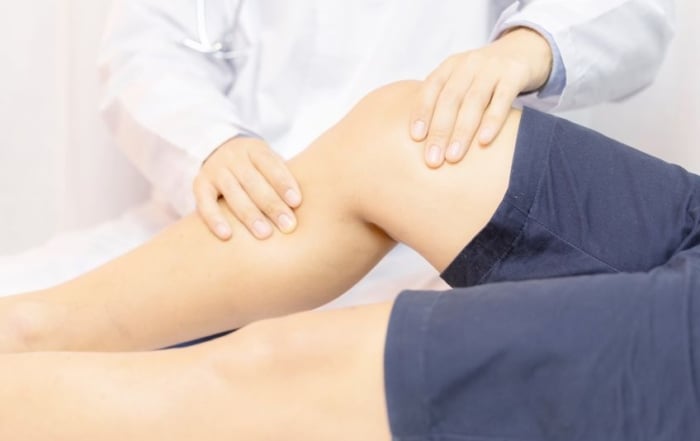
Knee Replacement: Can Regenerative Medicine Help You Avoid Major Surgery?
RIO Orthopedic2026-09-15T17:28:42-05:00September 17th, 2026|
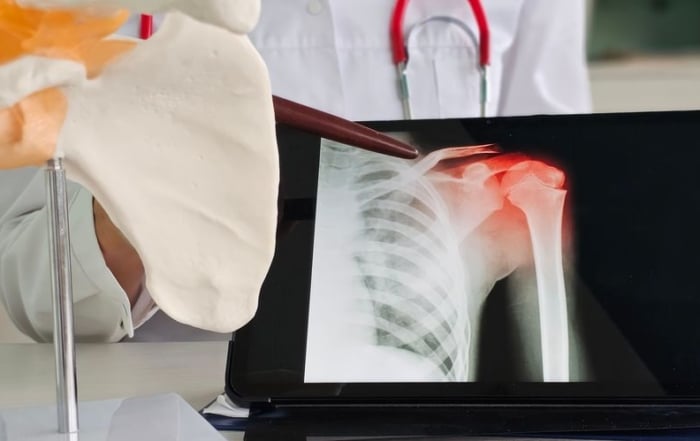
Collarbone Surgery: 3 Signs You Need Surgical Repair For A Clavicle Fracture
RIO Orthopedic2026-09-10T12:12:40-05:00September 10th, 2026|

Achilles Tendon Repair Recovery: The Critical Role Of Physical Therapy
RIO Orthopedic2026-09-10T12:12:58-05:00September 3rd, 2026|