
Worried About Your ACL Tear?
The anterior cruciate ligament (ACL) tear is a common knee injury that significantly impacts knee function. The ACL is a strong ligament that connects the tibia and femur. Along with the posterior cruciate ligament (PCL), the ACL stabilizes the knee and prevents unnatural movement. Injuries are common after a twist, fall, or collision. ACL tears can lead to pain and instability, making movement more difficult. Most cases are addressed surgically, but non-surgical ACL injury healing may be possible in some cases. Understanding injury severity and treatment options is essential to a smooth recovery.
Partial vs complete tears
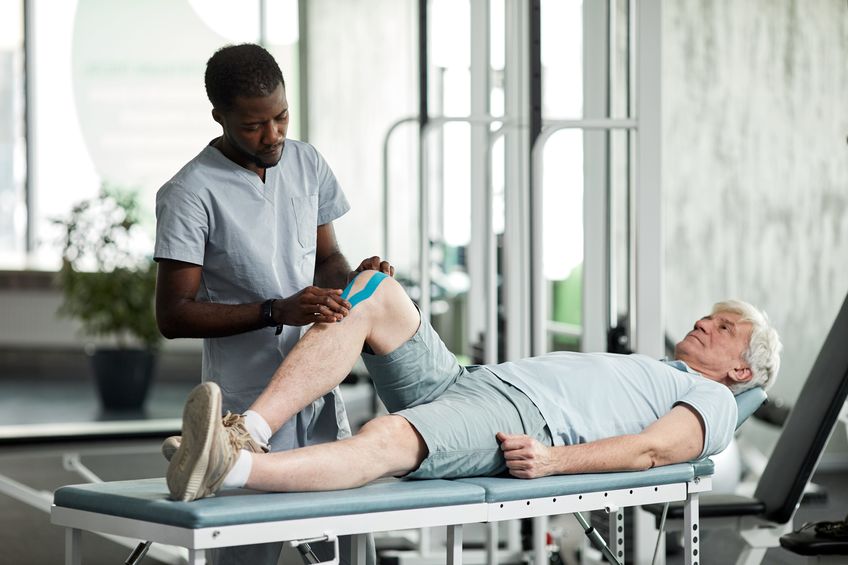
ACL tears can be classified by grades and differentiated by partial and complete tears. A partial tear involves damage to some but not all of the ligament. A grade 1 ACL tear occurs when the ligament is stretched, with some of the fibers damaged. If there is greater damage with more fibers affected, this is a grade 2 ACL tear. A complete tear, also called a grade 3 tear, is a total rupture of the ligament, with the fibers torn completely through. This injury is more severe, leading to significant pain, rapid swelling, and difficulty bearing weight. The type of injury determines which treatment will relieve pain and restore knee function.
Non-surgical treatment options
A surgeon or other medical professional will perform imaging scans and other tests to determine the extent of the ACL injury. This is often the most important factor in deciding whether surgery is performed. Non-surgical treatment involves a combination of rest, knee bracing, and pain medication. This strategy gives the ligament time to heal while reducing pain and swelling. Afterward, significant physical therapy (PT) is needed to support the knee. Exercises, stretching, and other movements restore strength, endurance, and flexibility. Other common non-surgical techniques include corticosteroids and regenerative medicine, such as platelet-rich plasma injections into the knee to promote healing.
Can an ACL heal without surgery?
An ACL tear can sometimes heal without surgery. Partial tears, in particular, can be managed non-surgically with the ligament healing naturally. Ligaments have a limited blood supply compared to muscles and tendons. With consistent treatment and therapy, however, grade 1 and 2 tears can show signs of healing, even with this limited blood supply. There have been rare cases where complete grade 3 tears healed non-surgically. The patient recovered and was able to achieve some degree of function. Non-surgical healing requires consistency, ongoing treatment, and a holistic approach that includes proper diet and sleep.
Long-term considerations
Avoiding surgery is possible, but not without drawbacks. Non-surgical ACL treatment is significantly longer and requires ongoing effort to achieve results. For severe grade 2 and 3 injuries in particular, the ligament will not heal and return to normal strength and function. There is a risk of instability and reinjury when participating in physical activity. Studies also show a higher risk of developing knee osteoarthritis. Non-surgical ACL injury healing depends on factors like age, activity level, and lifestyle. Some patients are younger individuals involved in sports or other physical activity and want to return as quickly as possible. Surgery may be best in these cases. If there is a high possibility that a complete tear will still produce significant pain and low function, surgery should be considered.
Get back into action
While ACL injuries are significant, immediate surgery is not always required. Some grade 1 ACL tears respond well to non-surgical treatment. Grade 2 and some grade 3 ACL tears can heal without surgery, but expect some reduced function. ACL reconstruction is recommended for moderate to severe injuries. The surgery removes the damaged tissue and inserts a new tendon. With physical therapy, the likelihood of returning to peak activity is significantly higher. Surgical or non-surgical treatment should be chosen based on medium to long-term health and fitness goals.
Recent Blogs
Knee Replacement: Can Regenerative Medicine Help You Avoid Major Surgery?
RIO Orthopedic2026-09-15T17:28:42-05:00September 17th, 2026|
Collarbone Surgery: 3 Signs You Need Surgical Repair For A Clavicle Fracture
RIO Orthopedic2026-09-10T12:12:40-05:00September 10th, 2026|
Achilles Tendon Repair Recovery: The Critical Role Of Physical Therapy
RIO Orthopedic2026-09-10T12:12:58-05:00September 3rd, 2026|