
More Than A Cold Shoulder
The shoulder dictates almost all movement involving the arms and hands. A healthy shoulder allows someone to reach overhead, lift objects, and play sports. Joints and nearby muscles can go cold if unused. When there are some other uncomfortable symptoms, this could be the sign of a frozen shoulder. Frozen shoulders are one of many injuries that can happen to this joint, but the condition is treatable.

What is a frozen shoulder?
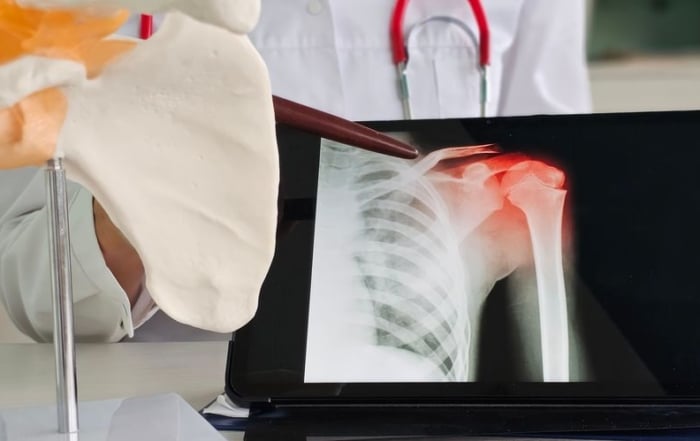
The shoulder is a ball-and-socket joint that connects the humerus to the scapula. Ligaments and tendons that protect the shoulder and help with mobility are wrapped around the joint. The shoulder has a capsule that covers the rotator cuff tendons. Frozen shoulder is a generalized pain and stiffness in the shoulder, often due to the thickening of this capsule. Over time, the shoulder loses mobility. Frozen shoulder is also called adhesive capsulitis. Here are 3 signs of injury that should signal a visit to an orthopedic specialist.
1. Can you move it?
Limited mobility is a common sign of frozen shoulder. Frozen shoulder patients quickly realize that one arm cannot move as freely as the other. The affected arm cannot fully extend overhead or behind when comparing both shoulders. Patients also cannot achieve full abduction to the sides or the front. This reduced range of motion (ROM) can last for several months.
2. Such a pain
Frozen shoulders can radiate pain and discomfort. The pain generally originates at the front of the outer shoulder. Over time, the pain radiates down the arm. Shoulder pain can be a confusing sign. Other injuries like rotator cuff tears and tendonitis will present with pain. Frozen shoulder feels like a generally dull, achy pain that inhibits movement, lasting about 6 months.
3. Are you compensating?
The condition often causes patients to compensate for the lack of mobility. For instance, the patient might bend the spine or lower back to improve reach. In addition, some patients shrug the opposite shoulder just to acquire extra ROM. Over time, completing daily activities like lifting objects or driving become more difficult.
Stages of frozen shoulder
A doctor will break the condition into the freezing stage, frozen stage, and thawing stage. The freezing stage has more pain and limited mobility, lasting up to 9 months. The frozen stage has less pain but severely limited mobility. The thawing stage gradually returns movement to the shoulder but can take up to 2 years.
Treatment and outcomes
Most cases respond well to non-surgical techniques. However, these treatments must remain consistent for long-term relief. Some options include stretching, physiotherapy, pain medication, and cortisone injections. Some doctors may inject sterile water into the shoulder to help the synovial fluid. If these fail, surgery may be necessary to reduce the thickness of the shoulder capsule. A frozen shoulder can take several years to overcome, but there is hope with early treatment. Know the signs and see a doctor for targeted treatment.
Recent Blogs

Knee Replacement: Can Regenerative Medicine Help You Avoid Major Surgery?
RIO Orthopedic2026-09-15T17:28:42-05:00September 17th, 2026|
Collarbone Surgery: 3 Signs You Need Surgical Repair For A Clavicle Fracture
RIO Orthopedic2026-09-10T12:12:40-05:00September 10th, 2026|

Achilles Tendon Repair Recovery: The Critical Role Of Physical Therapy
RIO Orthopedic2026-09-10T12:12:58-05:00September 3rd, 2026|