
Are You A Knuckle Cracker?
People crack knuckles by applying pressure with the next hand to the top of the joints. Others pull on each digit until there is a satisfying pop. For some, knuckle cracking is a sign of getting down to business. For others, the habit is a way to relieve tension. Whatever the reason, there is a common perception that cracking knuckles is inherently wrong. Others believe that the behavior can cause arthritis. For the knuckle-crackers out there, this article will bring some clarity to the practice.

Why do knuckles crack in the first place?
Doctors have a couple of theories behind joint popping. Joints contain synovial fluid, which helps with lubrication. Knuckle cracking may happen from tiny bubbles of gases that form under pressure. These bubbles collapse with cracking or pulling. This could be the reason why there is some time between cracking. Other studies noticed a cavity in the joint that creates the popping sound. Both may be right, but are these reasons behind arthritis?
Should you be worried about arthritis?
Joints have smooth cartilage that helps with shock absorption. Arthritis, particularly osteoarthritis, is the wear and tear of this cartilage, making simple movements painful. Many believe that knuckle cracking will lead to arthritis. However, studies show there is no clear relationship between the two. The practice won’t bring on arthritis any faster than the wear and tear that comes with age. Cracking the knuckles may be harmless, but that does not mean there aren’t any repercussions.
The possible dangers of cracking your knuckles
People who constantly crack knuckles should not expect any long-term harm. However, there is some potential fallout. For instance, excess cracking can increase the risk of inflammation. Inflammation is the body’s natural response to injury. If the joints are painful after popping, this could be the reason. For people who are habitual hand crackers, there is also the possibility of injuring the joints. Weakened joints mean more swelling and decreased grip strength. These possibilities are enough to look into ways to prevent a future hand injury.
Here’s how to avoid a hand injury
Hearing that satisfying crack may just annoy others for now, but there is a chance of a hand injury. The obvious solution would be to stop cracking the knuckles, but that’s easier said than done. To fix the issue, start by looking at the stressors behind the habit, then try another productive routine instead. With intentional practice, anyone can significantly reduce the odds of a hand injury. Furthermore, strengthening the grip with a stress ball and stretching can keep the joints pliable and healthy.
You’re in the clear, but not quite
Most doctors agree that cracking the knuckles will not lead to arthritis. The habit does not degrade the joint or cartilage any more than gradual wear and tear. That said, the behavior could lead to inflammation. Furthermore, cracking a joint could also be a sign of tightness or the joint compensating for another issue. Try some exercises to relieve the tightness instead. And when in doubt, having a doctor or physical therapist check out the joint may not be a bad idea.
Recent Blogs

Knee Replacement: Can Regenerative Medicine Help You Avoid Major Surgery?
RIO Orthopedic2026-09-15T17:28:42-05:00September 17th, 2026|
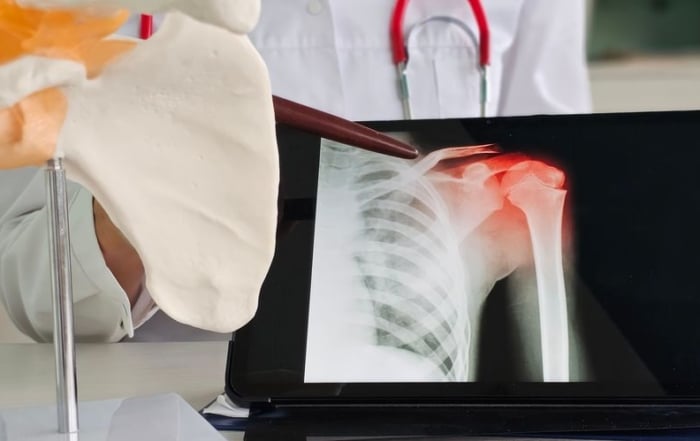
Collarbone Surgery: 3 Signs You Need Surgical Repair For A Clavicle Fracture
RIO Orthopedic2026-09-10T12:12:40-05:00September 10th, 2026|

Achilles Tendon Repair Recovery: The Critical Role Of Physical Therapy
RIO Orthopedic2026-09-10T12:12:58-05:00September 3rd, 2026|