
Is Your Rotator Cuff At Risk?
Shoulders play an integral part in everyday life, from lifting, throwing, climbing, and more. Unfortunately, due to the limited range of motion, shoulder injuries happen to thousands of people each year. Rotator cuff tears are the most common, with 1 in 3 persons over 60 at risk. Younger persons are also susceptible, particularly those involved in sports.

What’s causing that injury?
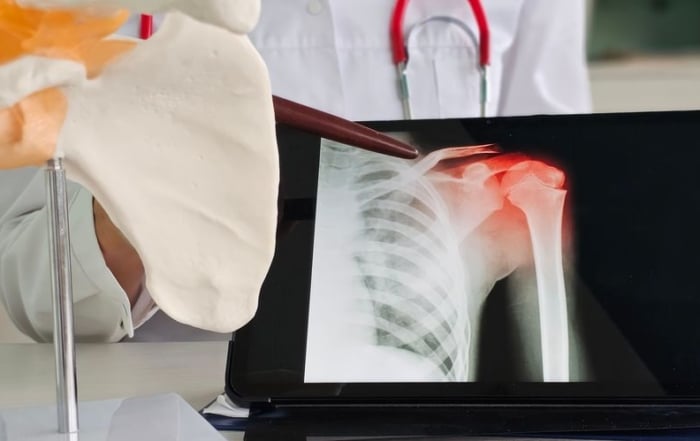
The shoulder consists of a ball-and-socket joint made by the humerus head fitting into the glenoid cavity. Surrounding the joint are several muscles, tendons, and ligaments. These form the rotator cuff, which holds the shoulder in place and allows for movement. Like tears, injuries are common and are caused by repetitive stress, falls, or degeneration over time. Look for these 3 common signs of a shoulder injury, like a rotator cuff tear.
1. Pain, pain, and more pain
As with any injury to the shoulder, pain is the first symptom. However, the pain does not feel closer to the skin. Rotator cuff tears present a dull ache deep in the shoulder. The pain is especially present when lifting the arm over the head. The painful shoulder also disrupts sleep, with the patient unable to rest on that side. While ice and painkillers can help, chronic pain lasting several weeks or more should raise alarm bells.
2. Look out for crepitus
A cracking or grating sound is a common sign of tears. Known as crepitus, or joint popping, since there is reduced stability, the joint may shift out of place. This joint cracking happens particularly when raising the affected shoulder. Some people chalk up joint popping to age, but a tear may cause the condition. The joint popping may even create pain, though there are instances where crepitus is painless.
3. An undeniable weakness
As the pain increases, the ability to effectively use the shoulder decreases, with muscle weakness a common symptom. The tear affects the muscle previously attached by the tendon. Over time, the patient will be unable to raise the arm without weakness and pain. This will also affect the ability to lift objects. Muscle weakness is a clear sign that medical attention is necessary.
Treating your tear
Rotator cuff tears feel similar to other shoulder injuries. When these 3 symptoms show up, see a doctor immediately to confirm the tear. The doctor will use a combination of an x-ray and MRI to assess the shoulder joint. From there, a combination of non-surgical and surgical options will help with recovery. Physical therapy exercises, medication, and rest can help most tears. Larger, more severe tears may benefit from corticosteroid injections or surgery. With surgery, the surgeon uses minimally invasive techniques to access and repair the tendon.
Don’t ignore the signs
Shoulder pain can linger for months if left untreated. In many situations, a rotator cuff tear causes pain, a popping sensation, and weakness. This can then lead to increased pain and a reduced range of motion. With a doctor’s help, shoulder pain can be a thing of the past. Don’t hesitate to speak with a specialist today.
Recent Blogs

Knee Replacement: Can Regenerative Medicine Help You Avoid Major Surgery?
RIO Orthopedic2026-09-15T17:28:42-05:00September 17th, 2026|
Collarbone Surgery: 3 Signs You Need Surgical Repair For A Clavicle Fracture
RIO Orthopedic2026-09-10T12:12:40-05:00September 10th, 2026|

Achilles Tendon Repair Recovery: The Critical Role Of Physical Therapy
RIO Orthopedic2026-09-10T12:12:58-05:00September 3rd, 2026|