
All About Ankle Sprains
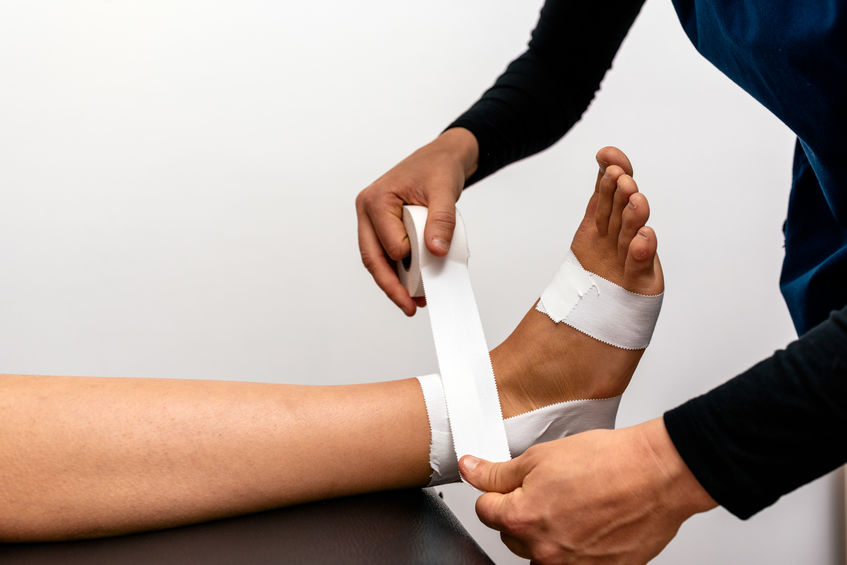
Many joints depend on ligaments and tendons for movement and stability. At the same time, joints are prone to injury and the ankle is no exception. Ankle sprains occur when a ligament in the ankle becomes stretched or partially torn. Most cases happen after a twist, fall, or collision while playing sports. Rolling the ankle means the ligament on the outer side is usually affected. Sprained ankles present with pain, swelling, instability, and difficulty applying pressure to the foot. While most sprains can heal naturally with rest, repeated ankle sprains can become a more severe musculoskeletal problem. The goal for anyone, especially active individuals, should be to apply techniques that help avoid the injury altogether.
Why should you worry?
An ankle sprain can usually heal with rest and bracing. The recovery time depends on the degree of injury. Ankle sprains are graded 1-3, with a grade 3 sprain resulting in damage or tearing to the ligament. Someone who has an ankle sprain is at risk of another injury, which can be worrisome. Repeated ankle sprains can lead to chronic instability, which limits mobility and movements like running. Individuals who work long active hours or those who participate in sports will notice a decrease in performance. There can be overcompensation on the other ankle, which can increase the risk of injury on that foot. Repeated cases lead to an increased risk of arthritis, more severe tears, or fractures requiring more costly surgeries, downtime, and a poor quality of life. Here are 3 ways to help lower ankle sprain risk and prevent the injury altogether.
1. Strengthen your ankles
The ankle joint is surrounded by tendons and ligaments while forming part of the larger leg. Strengthening the leg increases stability, so perform weekly exercises to reduce the risk of injury. Calf raises, hamstring curls, squats, leg extensions, and ankle circles are great examples of ankle-strengthening exercises. Add resistance such as weights or bands as recommended by a physiotherapist or fitness coach. Boosting balance also helps with preventing ankle sprains, as most injuries occur when planting a single leg on the ground or uneven surface. Consider weekly activities like yoga, stretching, or simply standing on a single leg. Consistently perform these exercises for the best results.
2. Check your footwear
Poor footwear in relation to activities is a risk factor for ankle sprains. Use supportive shoes as much as possible, especially during work, exercise, or sports. Make sure the shoes provide sufficient ankle support, lacing the shoes up tightly as needed. Avoid shoes that impact balance, especially if there is a history or risk of ankle injury. A doctor or podiatrist may recommend insoles that provide extra cushion and support. The wrong footwear or worn-out shoes can lead to injury check your shoes yearly depending on
3. Practice proper movement
Preparing for and practicing proper movement can help prevent injuries like ankle sprains. Anyone involved in sports, regardless of age, should warm up and stretch before the activity. A warm-up and stretching ensure the muscles are properly activated so there is no sudden strain on ligaments. Injuries can occur thanks to poor technique. Use proper form when running, walking on uneven surfaces, jumping, or engaging in other activities.
Keep ankle sprains at bay
Combining proper form, footwear, and exercise can limit or prevent future ankle injuries. Despite these strategies, there is still a risk of ankle sprains. Anyone with a suspected ankle injury after a fall or collision should seek medical attention. A doctor can assess the joint with physical examinations and imaging to confirm if there is severe damage. The medical team can then recommend treatment up to and including surgery. Thanks to same-day minimally invasive surgery (MIS), ankle injuries can be addressed with small incisions, minimal blood loss, and faster recovery. Protecting the ankles should act as a preventative measure and can also prevent future injuries.
Recent Blogs

Knee Replacement: Can Regenerative Medicine Help You Avoid Major Surgery?
RIO Orthopedic2026-09-15T17:28:42-05:00September 17th, 2026|

Collarbone Surgery: 3 Signs You Need Surgical Repair For A Clavicle Fracture
RIO Orthopedic2026-09-10T12:12:40-05:00September 10th, 2026|

Achilles Tendon Repair Recovery: The Critical Role Of Physical Therapy
RIO Orthopedic2026-09-10T12:12:58-05:00September 3rd, 2026|