
What Is A Knee Hyperextension?
The knee joint is designed to bend forward, and then return the leg to a straightened position. If the knee goes too far backward beyond this normal range of motion (ROM), knee hyperextension occurs. A hyperextended knee commonly occurs during falls, collisions, or a direct blow to the knee. The injury is also common in active sports like tennis, football, basketball, and soccer. A sudden stop, twist, or unnatural landing can hyperextend the knee. While most cases are resolved conservatively, there are times when knee hyperextension injuries require surgery.
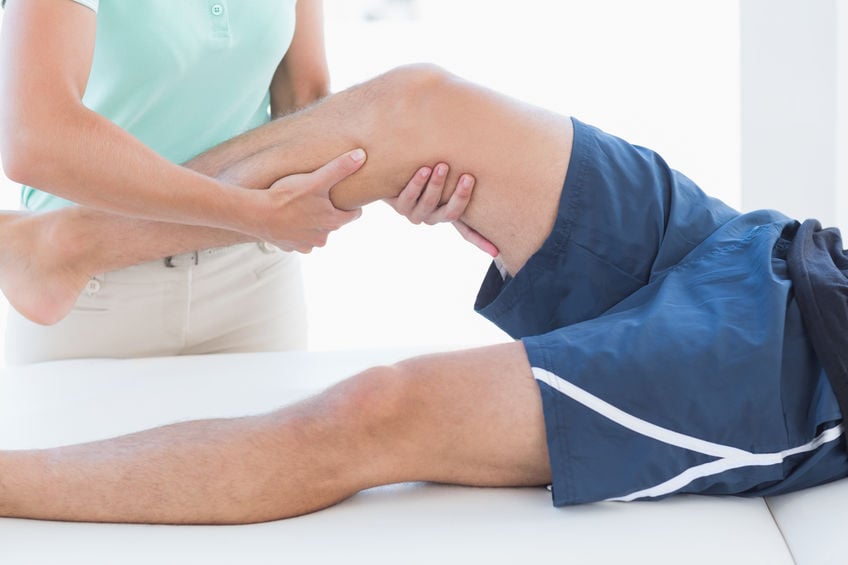
Knee hyperextension symptoms
The injury is signaled by the knee bending too far backward. The individual will feel this unnatural motion, followed by a sharp, intense pain at the back or front of the knee. The pain is followed by swelling and light bruising around the joint. Some individuals notice knee instability or the knee ‘giving out’, with difficulty walking or applying pressure on the knee. Bending or straightening the leg without pain and decreased mobility are other common symptoms. Anyone experiencing these symptoms should immobilize the knee and seek medical attention.
Don’t ignore these risk factors
Knee hyperextension injuries are more common in athletes, especially gymnasts, basketball, football, and soccer players. High-impact or contact sports run the risk of collisions or unnatural falls, leading to injury. Like anterior cruciate ligament (ACL) tears, women are more likely to get hyperextended knees during sports. Studies show differences in knee laxity, landing mechanics, and general anatomy make the injury more likely in women. Other risk factors include poor warm-up and stretching techniques, or weak quadriceps or hamstring muscles. There are cases of chronic knee hyperextension where overuse can lead to injury.
Your first line of treatment
Most hyperextended knee cases are mild to moderate and can be treated conservatively. Non-surgical treatment starts with rest, ice, compression, and elevation (RICE) techniques. This strategy gives the knee enough time to rest and heal while reducing inflammation. Doctors will provide pain medication including non-steroidal anti-inflammatory drugs (NSAIDs) to manage discomfort. Physical therapy (PT) plays an essential role in recovery. After the pain and swelling subsides, PT helps to strengthen the surrounding muscles, restore flexibility, and improve mobility. The PT team will also investigate running and landing techniques to encourage proper mechanics and prevent re-injury.
Do you need surgery?
Anyone experiencing a potential knee hyperextension should get imaging to confirm there is no significant damage to the joint. Most knee hyperextensions show no ligament or joint damage and may not need surgery. If there is ligament damage or clear structural changes, surgery is recommended. Sometimes, knee hyperextensions are accompanied by ACL tears, medial collateral ligament (MCL) tears, or meniscus damage. If knee pain and function do not improve with conservative treatment, surgery is necessary to restore knee function.
Surgical repair and recovery
Knee hyperextension surgery, in essence, is repairing the damaged components caused by the injury. If there is a suspected ACL or MCL tear, the surgeon will perform a ligament reconstruction. This procedure involves removing the damaged ligament and inserting a replacement tendon. The new ligament comes from the patient’s hamstring or a donor. Meniscus injuries are addressed by smoothing away or removing damaged cartilage. These procedures can be performed using minimally invasive surgery (MIS), a technique that promises small incisions, less blood loss, and fewer complications. On average, patients need 6-9 months of recovery to return to high-level sports.
Take knee hyperextension seriously
A knee hyperextension is a sudden, painful injury that can limit movement. Athletes, in particular, are likely to get knee hyperextensions, leading to significant downtime. Most cases do not need surgery but a detailed, careful recovery plan. Through rest and proper care, patients can return to normal activities within a few weeks. Severe cases, however, may require surgery, especially if ligament damage is discovered. Follow treatment instructions and look for worsening symptoms. With a surgeon’s help, a successful surgery is around the corner.
Recent Blogs
Knee Replacement: Can Regenerative Medicine Help You Avoid Major Surgery?
RIO Orthopedic2026-09-15T17:28:42-05:00September 17th, 2026|
Collarbone Surgery: 3 Signs You Need Surgical Repair For A Clavicle Fracture
RIO Orthopedic2026-09-10T12:12:40-05:00September 10th, 2026|

Achilles Tendon Repair Recovery: The Critical Role Of Physical Therapy
RIO Orthopedic2026-09-10T12:12:58-05:00September 3rd, 2026|